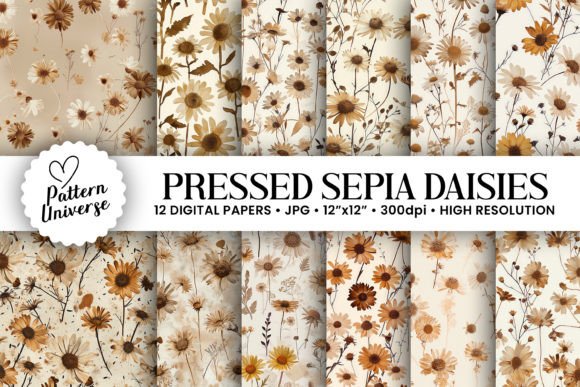
Pressed Sepia Daisy Flowers Patterns: A Practical Guide for High-Quality Crafts
If you are looking to elevate your next project with a touch of vintage elegance, Pressed Sepia Daisy Flowers Patterns offers a sophisticated solution that blends natural beauty with digital convenience. This collection is not just about pretty images; it is about acquiring a reliable asset that can transform ordinary materials into professional-grade designs. Whether you are wrapping a gift for a loved one, creating an invitation suite for a wedding, or designing merchandise for your small business, the choice of digital paper matters immensely.
Many creators rush into downloading free patterns only to find that the resolution is too low for printing, resulting in pixelated edges and muddy colors. Others purchase assets without verifying the file size, leading to frustration when they cannot print at the desired scale. Avoiding these pitfalls starts with understanding exactly what you are getting. This specific set includes 12 unique seamless patterns featuring pressed sepia daisies, all contained within a single zip file. Each design is delivered in high-resolution 300dpi, ensuring crisp details whether you are scaling them up for a large poster or down for a tiny label.
The Critical Importance of Resolution and File Size
One of the most common mistakes crafters make is assuming that any image found online will work for physical projects. When dealing with Pressed Sepia Daisy Flowers Patterns, the technical specifications are the difference between a blurry mess and a gallery-quality print. The files provided here are sized at 3600 x 3600 pixels, which translates to a perfect 12″ x 12″ at 300dpi. This standard is non-negotiable for anyone serious about print quality.
If you attempt to stretch a lower-resolution image to fit a tumbler wrap or a greeting card, the software will interpolate the pixels, causing the delicate lines of the pressed flowers to look jagged or soft. This error is often irreversible once the file is printed. By starting with a 300dpi source, you ensure that the texture of the sepia tones remains sharp and the contrast between the flower petals and the background stays distinct. Always check the metadata of any digital download before purchasing; if the dimensions are significantly smaller than 3600 pixels on the longest side, you should reconsider using it for any project requiring physical output.
Understanding Seamless Patterns for Versatile Applications
A "seamless" pattern is designed to tile infinitely without visible breaks, making it ideal for backgrounds, fabric prints, and wrapping paper. However, many users misunderstand how to utilize these files effectively. A frequent error is treating a seamless pattern as a single decorative element rather than a repeating texture. If you place a single instance of the daisy image onto a document without tiling it correctly, you will end up with awkward white space or repeated blocks that ruin the aesthetic flow.
To get the best results from this collection, you must learn how to apply the pattern across your canvas. In graphic design software, use the "fill" or "pattern overlay" function to extend the design across your entire surface area. This approach is particularly vital for entrepreneurs selling custom tumblers or scrapbook layouts. When the pattern repeats seamlessly, it creates a cohesive look that looks professionally designed rather than like a clip-art collage. If you are new to this, practice by dragging the pattern onto a blank artboard and adjusting the scale until the daisy motifs align perfectly at the edges.
Selecting the Right Asset for Your Specific Project
Not every digital paper fits every use case. Before you begin your workflow, evaluate the color palette and density of the Pressed Sepia Daisy Flowers Patterns. The sepia tone implies a warm, nostalgic feel, which is excellent for vintage-themed weddings, autumnal decor, or classic stationery. However, if your project requires a modern, bright, or neon aesthetic, these muted earth tones might clash with your brand identity or theme.
Another overlooked detail is the opacity and layering potential. Because these are AI-generated patterns based on pressed flowers, they often have a subtle texture that interacts differently with text overlays compared to flat vector graphics. If you plan to add text over the daisy pattern for invitations or marketing materials, ensure there is sufficient contrast. A common mistake is placing dark text on a dark section of the sepia pattern, rendering the message unreadable. To correct this, always test your text placement against the pattern in black and white first to verify legibility.
Maximizing Efficiency with the Digital Package
The value of this product lies in its organization and completeness. You receive 12 distinct digital papers within one zip file. This variety allows you to mix and match designs within a single project, such as using a denser daisy pattern for the border of a scrapbook page and a lighter version for the background. However, beginners often struggle with file management after downloading. Failing to unzip the files immediately or saving them in a disorganized folder can lead to lost assets later.
Take a moment to organize your library upon receipt. Create a dedicated folder named "Sepia Daisy Collection" and move all 12 high-resolution files there. Naming conventions help, but having the raw files accessible is key. Furthermore, because these are high-resolution PNGs or JPEGs (depending on the specific format included), they are heavy files. Ensure your computer has enough storage space and processing power to handle 3600-pixel images without lagging during editing. Slow performance can disrupt your creative flow and lead to accidental crashes that corrupt your work.
Avoiding Common Pitfalls in Commercial Use
For freelancers and small business owners, the legal terms of use are as important as the visual quality. Many creators assume that because a digital paper looks professional, it is free for commercial resale. This is rarely the case unless explicitly stated. Before using these patterns to create products for sale, such as printed tote bags or digital planners, review the license agreement associated with the download. Misunderstanding licensing can lead to costly legal issues or the removal of your products from marketplaces.
Additionally, be cautious about over-editing the images. While it is tempting to adjust the brightness or saturation to match a specific brand color, pushing the edits too far can destroy the integrity of the sepia effect. The charm of these patterns is their natural, muted appearance. Drastic color shifts can make the flowers look artificial and cheap. Instead of altering the core image, consider layering solid colors or adding textures around the pattern to achieve your desired look while preserving the original quality of the Pressed Sepia Daisy Flowers Patterns.
Final Checklist Before You Start
To ensure satisfaction with your purchase and the final outcome of your project, run through this quick verification list:
- Verify Resolution: Confirm the file is 3600 x 3600 pixels and 300dpi before opening it in your design software.
- Test Print: Print a small swatch to check color accuracy and sharpness before committing to a full-scale project.
- Check Licensing: Read the terms of use to understand if the pattern is allowed for personal or commercial applications.
- Assess Contrast: Ensure any text or elements placed over the pattern remain readable and distinct.
- Organize Files: Unzip and store the 12 digital papers in a secure, labeled folder for easy access.
By paying attention to these details, you avoid the frustration of re-doing work due to poor quality or technical limitations. The Pressed Sepia Daisy Flowers Patterns collection is a powerful tool when used correctly. It provides the foundation for beautiful, timeless designs that stand out in a crowded market of generic graphics. Whether you are a hobbyist crafting a birthday card or a marketer designing a seasonal campaign, starting with high-quality, well-understood assets sets the stage for success.
Remember, the goal is not just to have a pretty image, but to have a functional, versatile, and high-fidelity resource that supports your creative vision. With the right preparation and an eye for detail, these 12 seamless patterns can become the backbone of your next successful craft project.